

· 7 min read
Hybrid Cloud Strategy with OpenShift: When Is It Worth It?
How can OpenShift support a hybrid cloud strategy? Explore the benefits, challenges, and practical considerations for modern enterprises.
For years, one of the most common assumptions in enterprise IT was that everything would eventually move to the cloud. Reality has turned out to be more nuanced. While public cloud has undoubtedly transformed how organizations build and operate technology, most large enterprises no longer see full cloud migration as the ultimate goal.
Instead, many organizations have realized that the real question is not how to move every application into the same environment, but how to run each application where it delivers the greatest business value while meeting technical and regulatory requirements. This shift in thinking has fueled the rise of the hybrid cloud strategy.
One reason for this change is that application portfolios have become significantly more complex. Modern enterprises often operate decades-old business systems alongside cloud-native microservices, SaaS solutions, data analytics platforms, and increasingly, AI-powered applications. These workloads have different requirements, and no single infrastructure model is optimal for all of them.
For a customer-facing web application, rapid scalability may be the highest priority, making public cloud an ideal choice. A manufacturing control system, on the other hand, may require ultra-low latency and high operational resilience, making on-premises deployment more appropriate. Other applications may be constrained by compliance or data residency requirements that dictate where they can run.
Hybrid cloud is not driven by technological uncertainty. It is driven by the realization that different business objectives often require different infrastructure approaches.

However, hybrid cloud is not simply about combining on-premises infrastructure with public cloud services. The real challenge begins when organizations need to manage these environments consistently. As more platforms, services, and applications become part of the enterprise landscape, development processes, security controls, and operational models can quickly become fragmented.
This is where OpenShift becomes strategically important.
Why Has Hybrid Cloud Become the New Default?
Many organizations now operate in hybrid environments without explicitly calling them hybrid cloud environments. Technology evolution has naturally pushed enterprises in this direction.
A typical enterprise environment today often includes:
- On-premises infrastructure or private cloud environments
- AWS, Microsoft Azure, or Google Cloud platforms
- SaaS applications
- Edge and site-specific systems
This situation is rarely the result of a single strategic decision. New digital services are launched in the cloud, existing business-critical systems remain on-premises, and acquisitions introduce entirely new technology stacks. The result is a highly heterogeneous environment where different systems serve different business purposes.
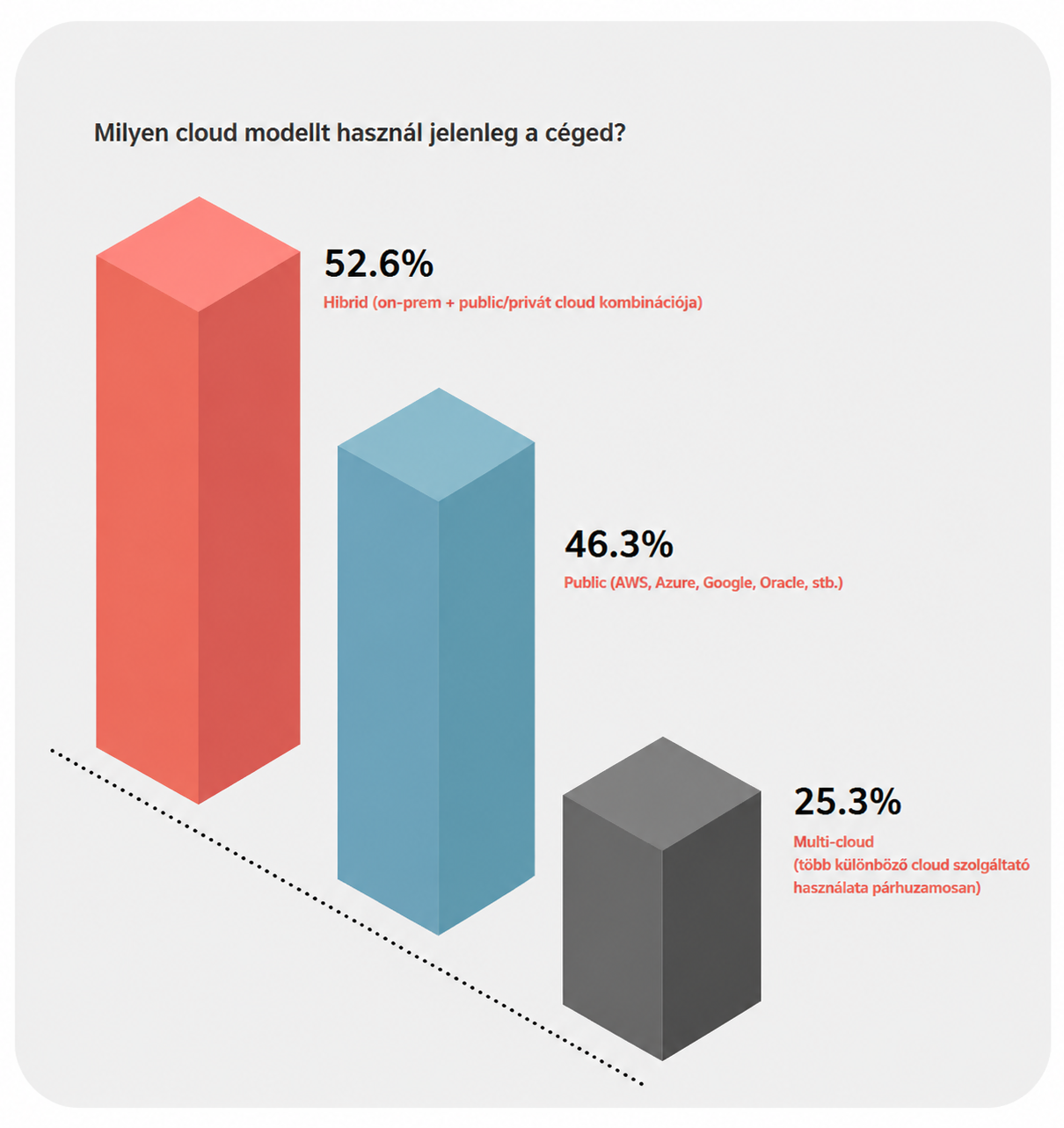
The growing adoption of hybrid and multi-cloud approaches is not just a global trend. According to the Hungarian Cloud Survey study conducted by Code Factory, 52.6% of Hungarian companies already use a hybrid cloud model, while 25.3% rely on the infrastructure of multiple cloud providers simultaneously. This highlights a clear shift away from single-platform strategies and underscores the increasing importance of managing diverse environments through a consistent operational approach.
Early cloud strategies often assumed that infrastructure standardization was inherently valuable. Today, many organizations recognize that true business value comes not from standardizing infrastructure, but from standardizing operations.
This represents a significant shift in perspective. The question is no longer whether every application should run on the same platform, but whether development, operations, and security can remain manageable despite the diversity of environments.
Why Does Hybrid Cloud Become More Complex Over Time?
Flexibility is the greatest strength of hybrid cloud. At the same time, that flexibility can introduce significant operational complexity.
Consider a simple example. A company runs its customer portal on AWS because it scales efficiently. Its ERP system remains in an on-premises data center because it handles sensitive business data. Analytics workloads consume cloud resources when large-scale computing capacity is needed.
At first glance, every application is running in the most appropriate environment.
A few years later, however, less visible challenges begin to emerge. Different environments rely on different monitoring tools. Deployment processes vary. Security policies are inconsistent. Development teams need expertise across multiple platforms.
One of the largest hidden costs of hybrid cloud environments is often not infrastructure spending, but operational complexity.
For many organizations, the biggest challenge is no longer where applications run, but how the same application or service is managed across multiple operational models.
The first decade of cloud adoption was largely focused on infrastructure. The next decade is likely to focus on managing operational complexity.

How Does OpenShift Help?
OpenShift is often described as an enterprise Kubernetes platform. While technically accurate, that description alone does not explain why it has become a foundational technology for many hybrid cloud and multi-cloud strategies.
For most organizations, creating a Kubernetes cluster is not the primary challenge. The real challenge begins when multiple development teams, hundreds of applications, and multiple infrastructure environments need to operate consistently over time.
One of OpenShift’s key strengths is its ability to provide a consistent operational model across different environments.
Developers can work with the same principles and deployment processes regardless of whether an application ultimately runs in an on-premises data center, AWS, or another cloud platform. Operations teams benefit from more consistent monitoring, logging, and access management. Security teams can enforce policies in a more predictable and centralized manner.
One of OpenShift’s greatest advantages is that it standardizes operations rather than infrastructure.
While this may seem like a subtle distinction, it is one of the main reasons why OpenShift has become a core component of modern enterprise platform strategies.
What Is the Difference Between Kubernetes and OpenShift?
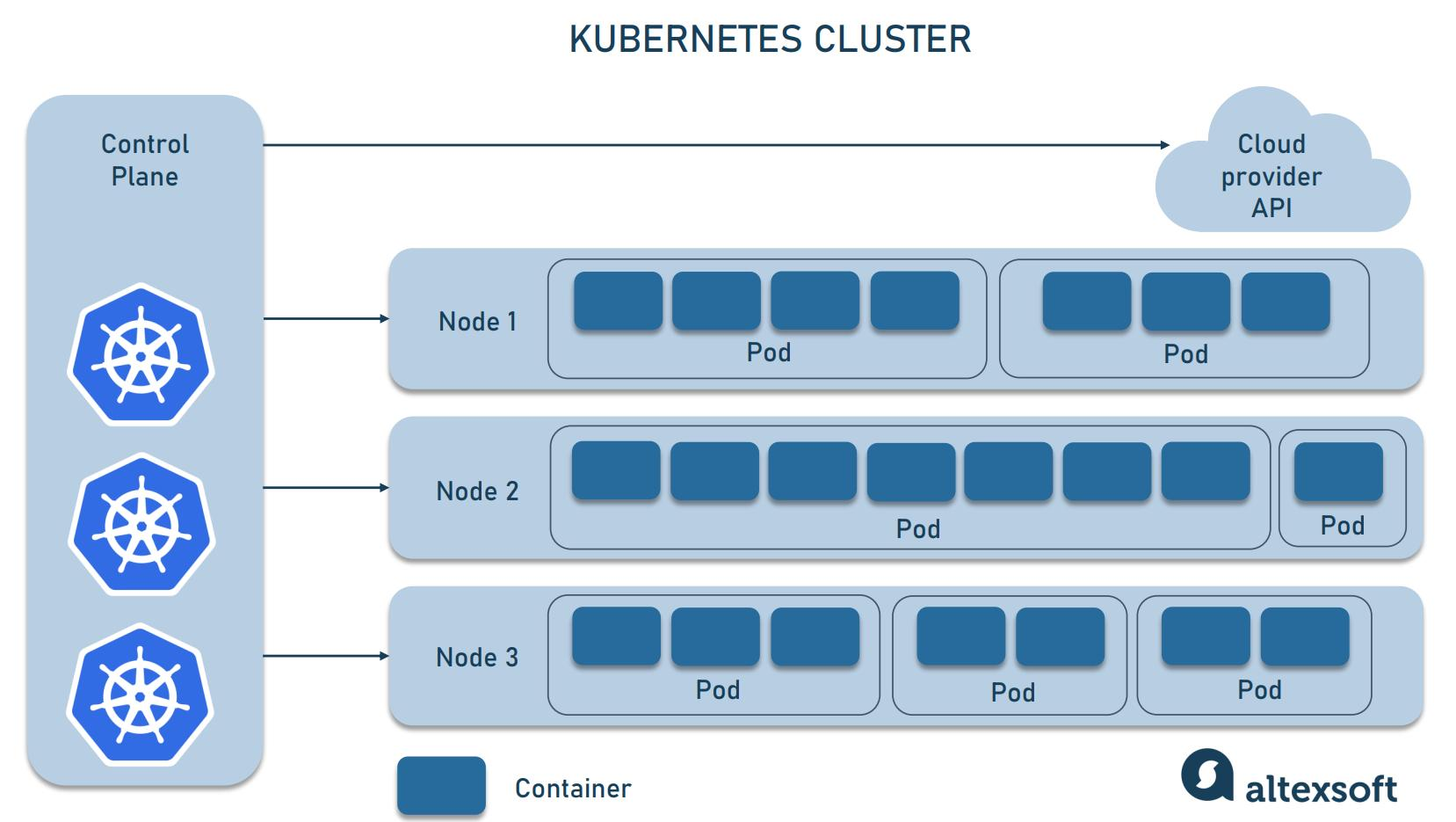
Kubernetes has become the industry standard for running containerized applications. Virtually every modern application platform is built on Kubernetes.
However, many organizations quickly discover that in enterprise environments, Kubernetes alone is only the starting point.
Most enterprises also require:
- Identity and access management
- Monitoring and logging capabilities
- CI/CD integration
- Security controls and governance
- Platform lifecycle management
These capabilities can certainly be assembled from individual tools, and for smaller environments this may be perfectly sufficient.
As organizations grow and their platforms become more complex, however, integration and operational consistency become increasingly important. One of OpenShift’s key benefits is that it provides many of these capabilities as part of an integrated platform rather than requiring organizations to build and maintain them separately.
What Does a Typical Hybrid Cloud Architecture with OpenShift Look Like?
Consider a manufacturing company with facilities in multiple countries.
Production systems run on local infrastructure because they require minimal latency. Customer-facing applications operate in the cloud because they benefit from scalability. Data analytics workloads use public cloud resources when large-scale computing power is needed.
Although these systems run in different environments, development and operations teams do not necessarily need to manage them differently.
When the same deployment principles, operational processes, and security policies are applied across environments, organizations can significantly reduce complexity and improve consistency.
This is where hybrid cloud strategy and OpenShift intersect.
When Does an OpenShift-Based Hybrid Cloud Strategy Deliver the Most Value?
Many organizations initially evaluate OpenShift from an infrastructure perspective. In reality, much of its value is realized through operational efficiency.
- OpenShift is particularly valuable for organizations that:
- Have multiple development teams working in parallel
- Operate both cloud-native and legacy applications
- Use multiple cloud providers or infrastructure environments
- Must comply with strict regulatory or compliance requirements
- Need long-term scalability and operational consistency
In these environments, OpenShift becomes more than a technology platform. It provides a common operational foundation that allows organizations to grow without experiencing uncontrolled increases in operational complexity.
Conclusion
Today, a hybrid cloud strategy is no longer a transitional stage between traditional infrastructure and public cloud. For many organizations, it has become the operating model that best supports business agility, regulatory compliance, and technological innovation.
At the same time, the challenge is becoming less about infrastructure itself.
The real question is how organizations can develop, deploy, and operate applications consistently when those applications run across multiple environments.
OpenShift addresses this challenge. Not by forcing every system into the same infrastructure model, but by providing a common operational framework for increasingly complex IT environments.
In the long term, this may prove to be one of the most important foundations of a successful hybrid cloud and multi-cloud strategy.
If you’re curious about how we at Code Factory can help you with this, take a look at our services pages.